Key takeaways
- Structured cabling supports dependable data, voice, Wi-Fi, security, cameras and future commercial expansion.
- Cat6 suits standard business networks; Cat6A supports full-distance 10-gigabit links and demanding PoE devices.
- Fiber optic cabling provides high-bandwidth, long-distance backbones between floors, buildings and telecom rooms.
- Site surveys, certified testing, labeling and documentation reduce installation surprises and simplify future maintenance.
Network Cabling Company Carson CA, Alliance Cabling Inc
Alliance Cabling Inc delivers professional network cabling services for businesses that need their communications infrastructure planned with care and installed for daily dependability. As a network cabling company Carson CA property managers, business owners, and facilities teams can call for structured wiring work, the company serves office, retail, industrial, and multi-site commercial environments across Los Angeles County, Orange County, and surrounding California communities. From Carson to Long Beach and nearby city locations, the focus is practical: clean cable pathways, accurate labeling, orderly racks, and connections that support the equipment people rely on every day. Commercial cabling is not merely a back-of-house detail. It affects workstation connectivity, wireless coverage, phones, cameras, door hardware, and the ability to make changes without tracing mystery lines above a ceiling or behind a wall. Alliance Cabling Inc approaches network cabling with that operational reality in view. Its team can coordinate low voltage cabling services around tenant improvements, remodels, office moves, and new build-outs, working toward a finished installation that is serviceable long after construction crews leave. A capable cabling contractor accounts for cable type, pathway capacity, separation from electrical systems, termination quality, testing, and documentation before the first run is pulled.

Commercial Cabling Priorities
- Plan cable pathways for current equipment and future expansion.
- Use accurate labels to simplify moves, repairs, and upgrades.
- Keep racks orderly for fast access and cleaner maintenance.
- Separate low-voltage cabling from electrical systems where required.
- Test terminations and document every connection before handoff.





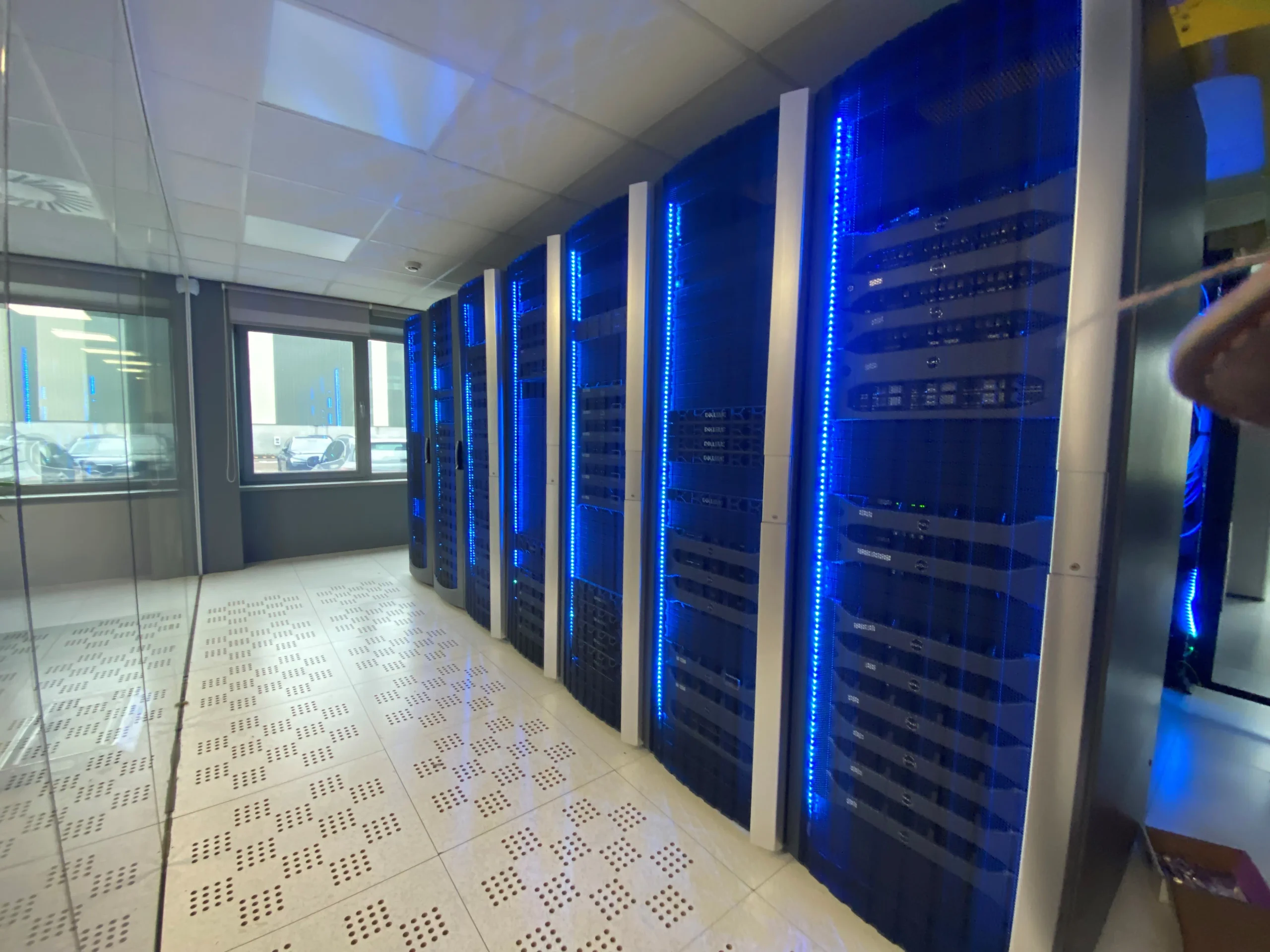
Structured Cabling Services and Commercial Cabling Design
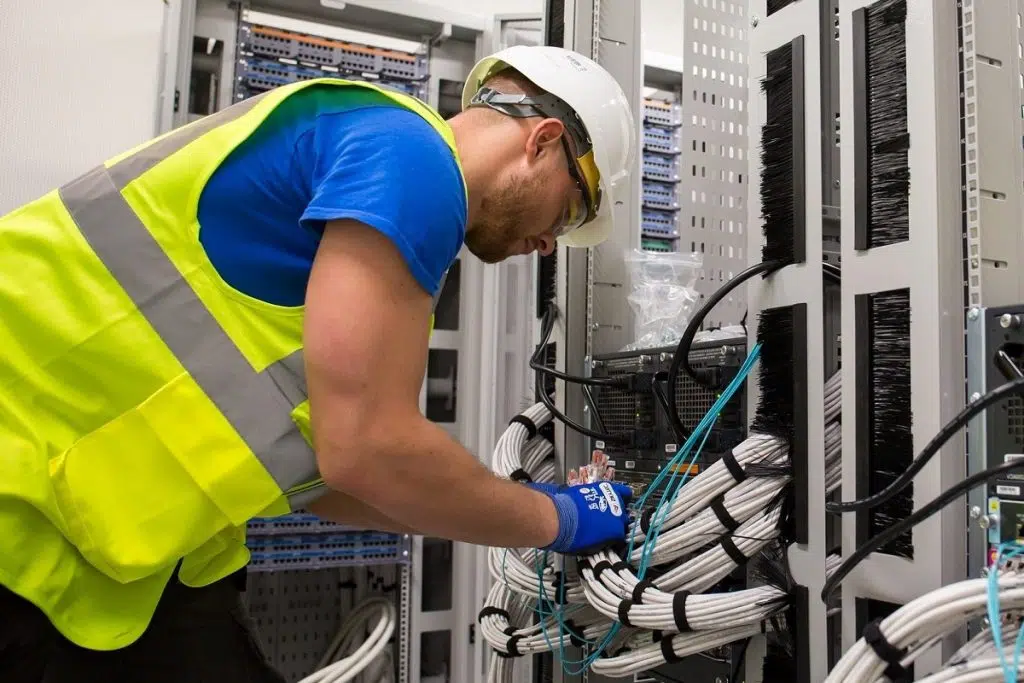
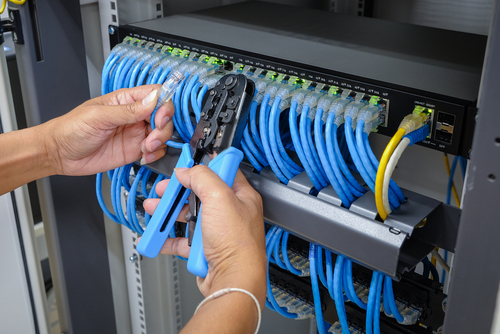
A well-planned communications backbone gives a commercial property room to grow without repeated disruption. Our structured cabling services pair commercial cabling design with careful installation for data, voice and fiber optic systems. From network cable pathways to labelled terminations, our cabling contractors build structured cabling that is orderly, serviceable and suited to everyday site operations.
Network Cabling Options: Cat6, Cat6A and Fiber Optic
Network cabling should reflect the demands of the building, not just the devices occupying it on opening day. Cat6 remains a sound choice for many office workstations, phones, access points and standard business data connections. It supports gigabit service comfortably and can carry 10-gigabit traffic across shorter runs, making it a practical fit for smaller floors or conventional office layouts.
Cat6A provides more headroom for 10-gigabit data across the full 100-metre channel. Its larger construction and tighter performance requirements call for disciplined routing, bend control and termination during cabling installation. That extra attention pays off in dense workplaces using high-capacity wireless access points, video systems, large file transfers or Power over Ethernet equipment. Cable bundle size and heat matter with PoE, so the design should account for tray fill, separation and future pulls from the start.
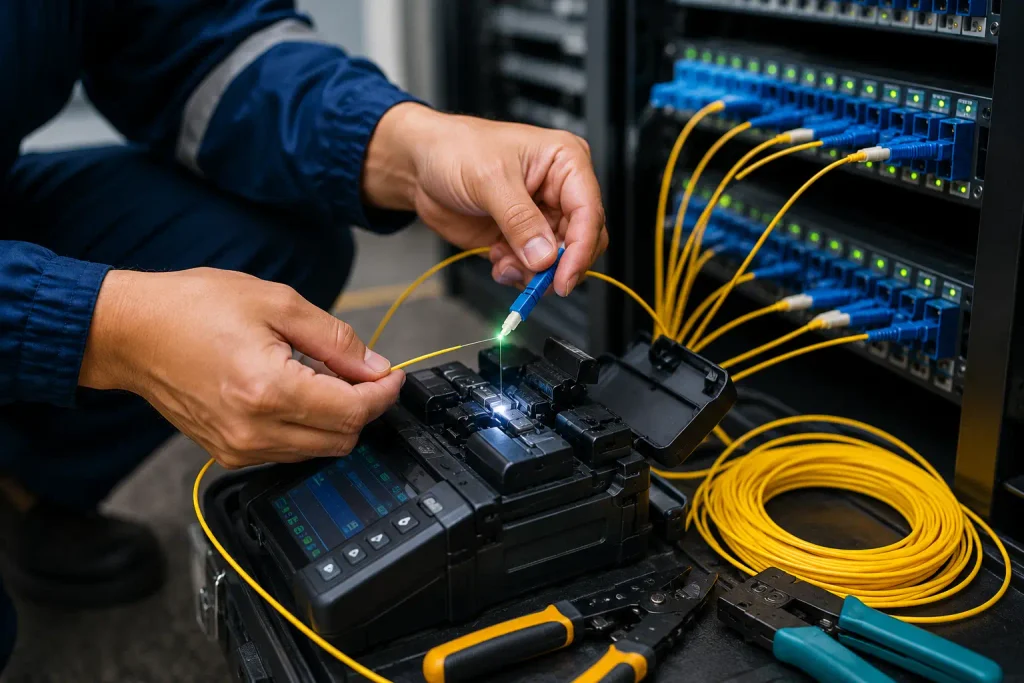
Fiber optic cabling is the preferred backbone between floors, buildings, telecom rooms and equipment areas where distance, bandwidth or electrical isolation shape the brief. Multimode fiber suits many internal commercial links; single-mode fiber is often selected for longer campus runs or plans that may require greater reach later. A thoughtful design may use fiber for backbone data, Cat6A for horizontal cabling, and dedicated pathways for voice or specialty systems.
The right selection is only part of the work. Clear labelling, certified test results, documented routes and sensible rack layout give facilities teams a network cable system they can trace, maintain and extend without guesswork.
Quick Guide to Cat6, Cat6A and Fiber Optic Cabling
| Cabling option | Best suited to | Key planning considerations |
| Cat6 | Office workstations, phones, access points, standard business data connections, smaller floors and conventional office layouts | Supports gigabit service and can carry 10-gigabit traffic over shorter runs. |
| Cat6A | Dense workplaces with high-capacity wireless access points, video systems, large file transfers or Power over Ethernet equipment | Supports 10-gigabit data across the full 100-metre channel. Its larger construction requires disciplined routing, bend control and termination. Plan for PoE bundle size, heat, tray fill, separation and future pulls. |
| Fiber optic cabling | Backbone links between floors, buildings, telecom rooms and equipment areas where distance, bandwidth or electrical isolation matters | Multimode fiber fits many internal commercial links; single-mode fiber suits longer campus runs or plans needing greater reach later. |
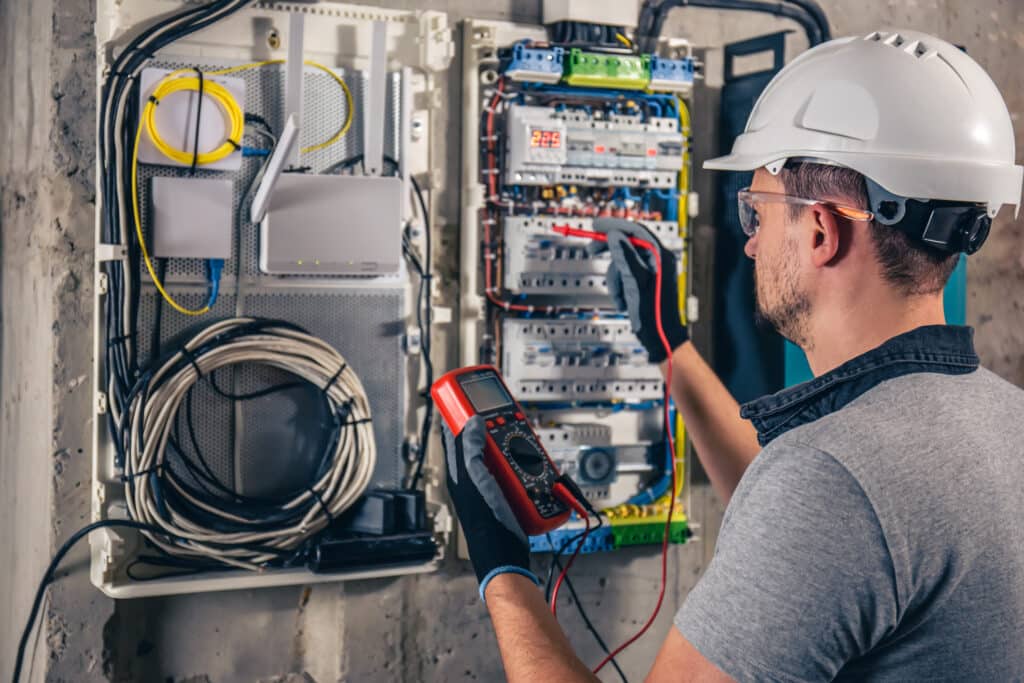
Installation, Testing and Documentation for Carson Sites
Reliable structured cabling begins before the first cable is pulled and continues after each outlet is live. For Carson businesses, disciplined network cabling installation, cable certification and practical troubleshooting support dependable daily use. Clear records give facilities teams a baseline for moves, repairs, additions and future commercial cabling services rather than unknown runs above the ceiling.
Site Survey, Service Scope and Free Quote
Every successful cabling project starts with a site survey that looks past the floor plan. A technician walks the Carson property, traces likely pathways above ceilings and through walls, notes existing racks, power, grounding and carrier entry points, and counts the devices each area will support. The survey should cover workstations, Wi-Fi access points, cameras, phones, point-of-sale equipment and links between buildings. It should identify restrictions such as occupied offices, after-hours access, fire-rated penetrations, lift access and landlord requirements.
That fieldwork turns a broad request for commercial cabling services into a defined scope. A clear quote identifies the proposed cable category, outlet and patch-panel counts, rack work, pathways, labeling, testing and restoration work. It should state assumptions about ceiling access, available conduit, equipment-room capacity and work windows, so there is less room for surprise charges once installation begins. Where a building presents options, the quote can separate a practical baseline from upgrades such as additional fiber strands, spare conduit or higher-density cabinet hardware.
A free quote is most useful when it follows the survey rather than a quick estimate based solely on square footage. Share current pain points, planned headcount, new equipment and any leasehold deadlines during the walk-through. That gives the cabling team a realistic picture of the work and lets Carson property managers compare services on scope, materials, testing standards and documentation, not price alone.
Site Survey Checklist
- Map ceiling, wall, conduit and carrier-entry pathways.
- Count connections for desks, Wi-Fi, cameras, phones and POS equipment.
- Record access limits, fire-rated penetrations and landlord rules.
- Request itemized cable, rack, labeling, testing and restoration costs.
- Share growth plans, equipment changes and leasehold deadlines.