
Key takeaways
- Structured copper and fiber cabling supports reliable data, Wi-Fi, security, phones, and future business growth.
- Site surveys identify pathways, equipment locations, interference risks, and capacity needs before installation begins.
- Testing, labeling, and documentation simplify troubleshooting, maintenance, upgrades, and moves.
- Torrance commercial projects benefit from tailored planning for offices, warehouses, medical facilities, retail, and multi-tenant properties.
Network Cabling Company Torrance CA: Network Cabling Services
A business network is only as dependable as the cabling behind the walls, above the ceiling grid, and inside the equipment room. For offices, warehouses, medical practices, retail sites, and other commercial properties in Torrance, CA, that foundation affects daily communication, cloud access, security devices, Wi-Fi coverage, and room for growth. Lawrence Cable Service provides professional network cabling services built around the practical demands of each site, not a one-size-fits-all layout.
As a network cabling company Torrance CA businesses can call for planned, clean installations, we begin with the building itself: pathways, distance limits, rack locations, work areas, power considerations, and the systems that need to connect. That preparation helps prevent the loose cables, undocumented runs, and awkward equipment-room changes that can complicate service later.

Our network cabling services include structured copper and fiber installation, data drops, patch panels, cable management, labeling, testing, and documentation. The goal is straightforward: dependable connections that technicians can identify and service without disrupting the rest of the operation. Whether the project is a tenant improvement, office expansion, warehouse buildout, or replacement of aging infrastructure, our solutions are designed to support present-day traffic and sensible future capacity. For commercial clients across Torrance, clear workmanship and responsive local support make the network easier to run, maintain, and adapt.
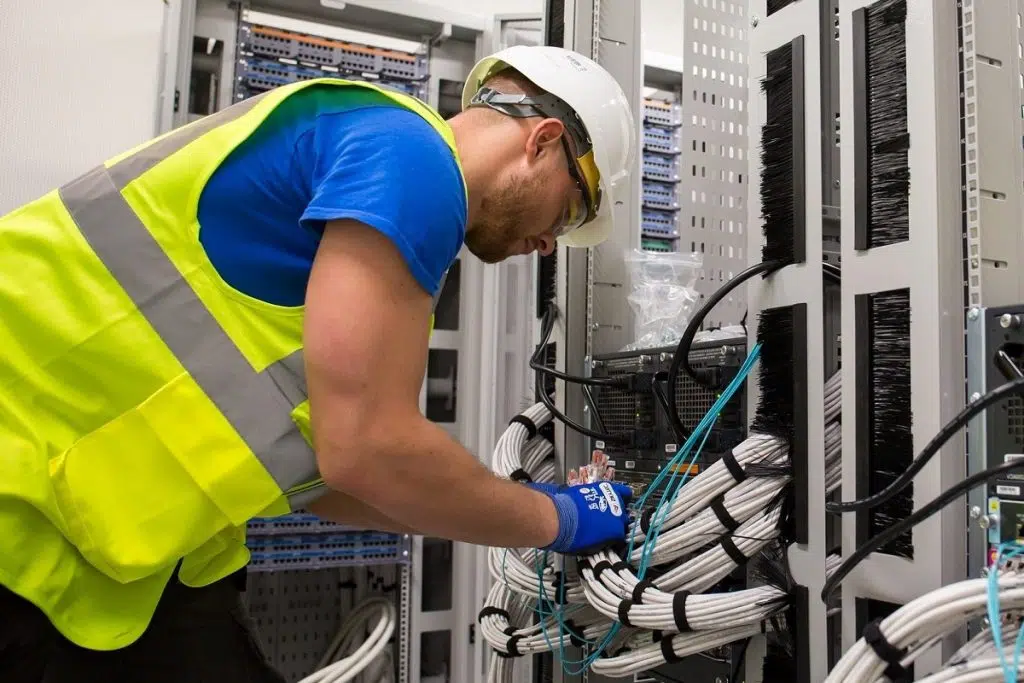



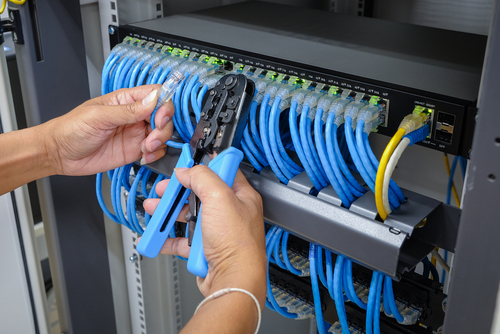


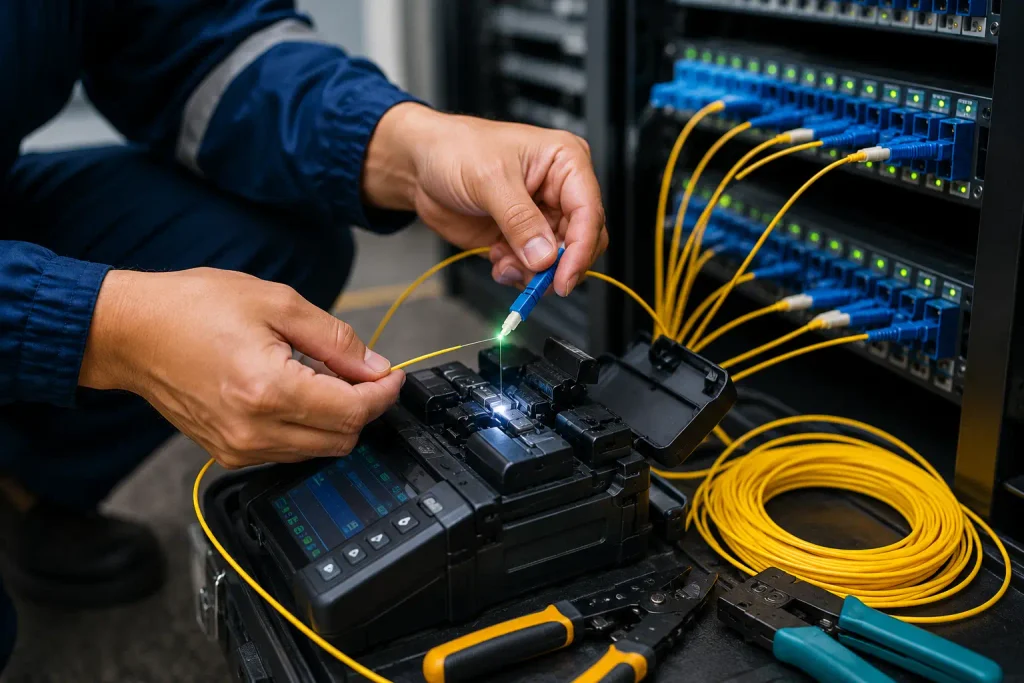
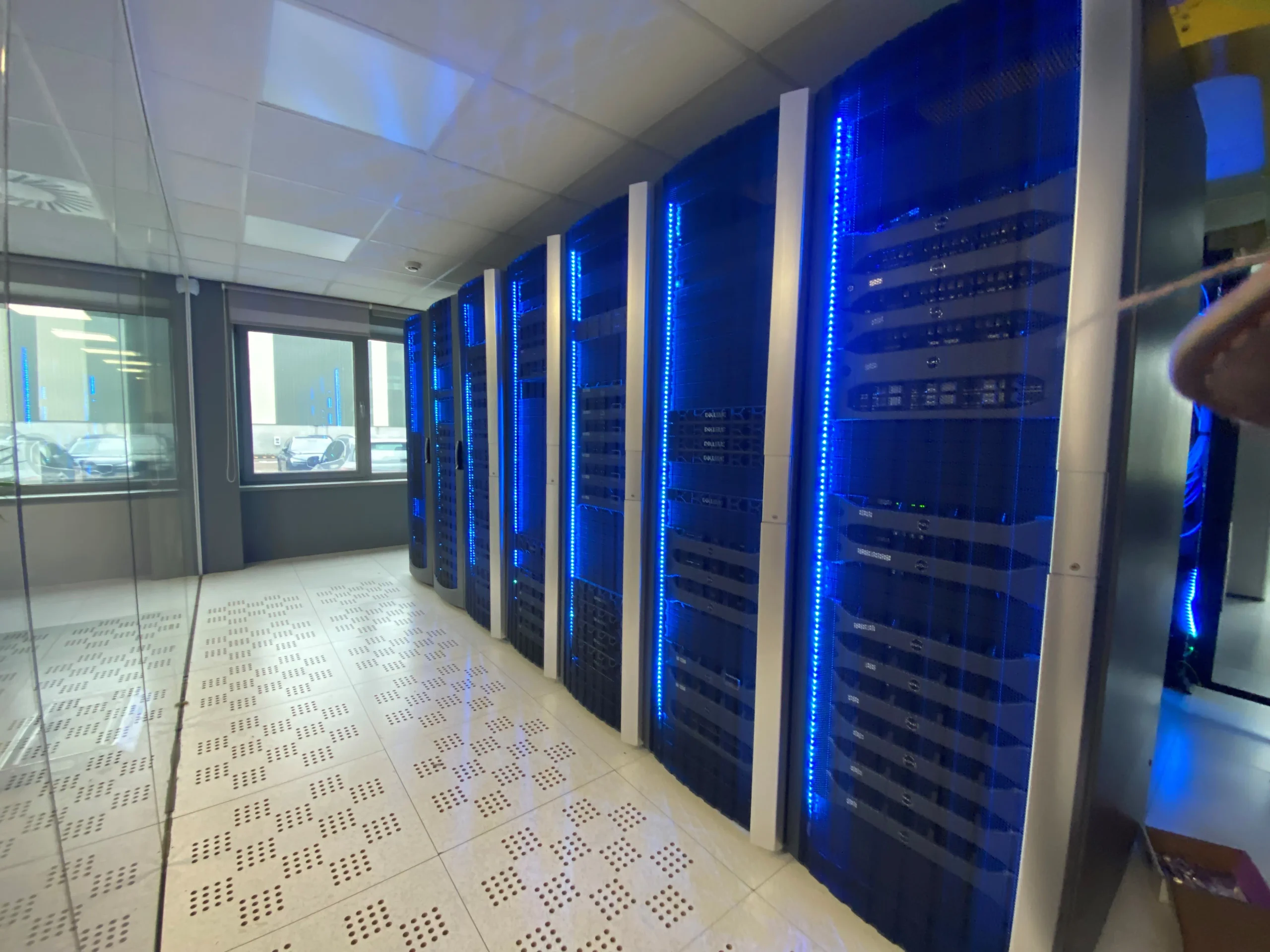
Structured Cabling and Commercial Cabling Solutions
A well-planned communications backbone keeps a commercial property ready for the daily demands of staff, guests, tenants, security systems, and connected equipment. Structured cabling brings order to that backbone, using clearly labeled pathways, termination points, and distribution areas that make moves, additions, and repairs far less disruptive. Rather than running isolated cable lines whenever a new device arrives, a unified system gives the building a practical framework for growth.
Our commercial cabling work covers data cabling for offices, retail spaces, medical facilities, warehouses, schools, and mixed-use properties. Each installation starts with the building’s layout and intended use: workstation density, wireless access point locations, phone systems, cameras, access control, audiovisual needs, and server-room requirements all shape the plan. Low voltage cabling must be routed cleanly, protected where needed, and tested before handoff, not simply pulled above a ceiling and left unseen.
Fiber optic cabling is often the right choice for long runs, high-bandwidth connections, and links between telecom rooms or separate buildings. Fiber provides the capacity modern networks need without sacrificing signal quality over distance. Copper cable remains a strong fit for many device connections, so the best signal solutions often use both.
Experienced cabling contractors coordinate with electricians, IT teams, and other trades to keep the project moving. From new construction to tenant improvements and targeted upgrades, dependable cabling services create a system that is neat, documented, and ready to support the equipment your property relies on.
Commercial Cabling Priorities
- Map workstations, wireless points, cameras, phones, and access-control devices.
- Use labeled pathways and termination points for easier repairs and future changes.
- Select fiber for long-distance, high-bandwidth links between telecom rooms or buildings.
- Use copper cabling for device connections where distance and bandwidth needs permit.
- Test every cable run and provide clear documentation at project handoff.
Cabling Planning, Site Survey and Cable Installation
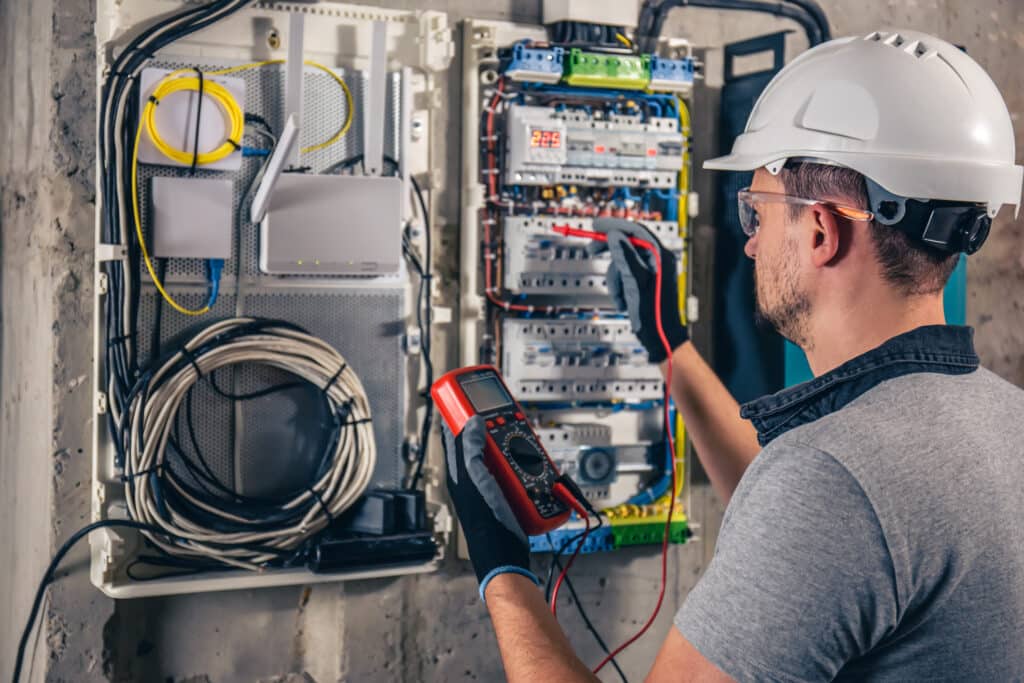
Reliable network cabling starts long before a cable is pulled. A detailed site survey maps the building’s structure, existing pathways, equipment rooms, ceiling spaces, access restrictions and likely sources of electrical interference. It gives the installation team a clear view of where data outlets belong, how routes can be kept accessible, and where future growth may require spare capacity. For offices, retail premises, warehouses and multi-tenant properties, that early survey work prevents messy routes, avoidable disruption and expensive rework.
Planning should match the cabling system to the job. Low voltage copper cable may suit desks, wireless access points, cameras and phones, while fiber optic cabling is often the right choice between floors, buildings or high-bandwidth equipment. Cable lengths, bend radius, fire-rated routes, containment and termination locations all need careful attention. A well-planned commercial cabling installation keeps data services tidy, labelled and easier to service years later. The finished network should support current equipment without boxing the business into a fixed layout, leaving sensible room for extra outlets, new racks and changing technology.
Commercial Cabling Planning Checklist
| Planning area | What to assess during the site survey | Why it matters |
| Building structure | Building layout and structure | Helps map suitable cable routes and outlet locations. |
| Existing pathways | Available routes for cable runs | Keeps routes accessible and avoids messy installation work. |
| Equipment rooms | Locations of equipment rooms and new rack space | Supports planned termination points and future equipment growth. |
| Ceiling spaces and access restrictions | Ceiling voids, access limits and restricted areas | Helps the team plan workable routes with less disruption. |
| Electrical interference | Likely sources of electrical interference | Helps guide cable routing decisions. |
| Cable selection | Whether low-voltage copper or fibre optic cabling suits each connection | Copper may suit desks, wireless access points, cameras and phones; fibre may suit links between floors, buildings or high-bandwidth equipment. |
| Cable routes and containment | Cable lengths, bend radius, fire-rated routes and containment | Supports tidy, serviceable cable runs. |
| Termination locations | Locations for outlets and cable terminations | Helps keep data services organised and easier to service. |
| Labelling | How completed data services will be labelled | Makes the network easier to service years later. |
| Future capacity | Spare capacity for extra outlets, new racks and changing technology | Leaves room for growth without fixing the business to one layout. |
Cabling planning checklist
- Map routes, ceiling spaces, equipment rooms, access limits, and electrical interference sources.
- Select copper for desks, phones, cameras, and wireless access points.
- Use fibre between floors, buildings, or high-bandwidth equipment.
- Plan cable lengths, bend radius, fire-rated routes, containment, and termination points.
- Leave spare capacity for extra outlets, racks, and layout changes.
Testing, Labeling and Documentation for Commercial Cabling
A commercial cabling installation is not finished at the point the last faceplate is fitted. Testing and clear records establish whether each link will carry the data load it was designed for and give building teams a usable reference long after installers leave. In offices, clinics, schools and mixed-use properties, that paper trail often separates a quick fault call from hours spent tracing an unidentified cable above a ceiling.
Cable certification uses calibrated test equipment to measure permanent links against the relevant performance class. Results commonly cover wire map, length, insertion loss, return loss, crosstalk and propagation delay. A pass on every channel matters; a patchy result can create intermittent faults that only appear during busy periods or after new equipment is connected. Certification should match the specified category and the actual structured cabling design, rather than relying on a basic continuity test.
Good network cabling services finish with labelled outlets, patch-panel ports, cabinet positions and pathways, backed by test reports and marked-up plans. Labels should correspond from workstation outlet to panel and cabinet, using a format staff can read without a decoder. Records need to identify spare capacity, fibre routes, grounding details and any moves made during the project. Kept with site maintenance files, this documentation helps IT teams protect systems, plan changes and support tenants without disturbing live services.
Request Cabling Services in Torrance, CA
A well-planned cabling system gives a commercial property the dependable physical foundation its communications, security, wireless access points, and connected equipment rely on every day. For businesses in Torrance, CA, the right installation starts with a conversation about how the space works now and where it may need to grow. Office suites, warehouses, medical facilities, retail locations, and multi-tenant buildings each call for a different approach to cable routing, equipment placement, labeling, and access.
Request a site survey to review the building’s pathways, existing infrastructure, work areas, telecom rooms, and project constraints. This on-site review helps define a practical scope before work begins, whether the need is a few new data drops, a full office build-out, fiber connections between rooms, or cleanup of an overcrowded rack. Clear planning can limit disruption to staff and keep the finished system organized for future service.
Ask for a detailed quote that identifies the proposed cabling services, cable type, outlet locations, testing, labeling, and installation schedule. A qualified network cabling company Torrance CA businesses can call should be familiar with the demands of Los Angeles County properties, from active workplaces to complex retrofit sites. Share your floor plans, move date, device count, and any requirements for cameras, phones, Wi-Fi, or access control. With those details in hand, the project can be scoped around your operation rather than a generic package.